
Early Warning Signs of Heart Failure You Shouldn’t Ignore
Heart failure announces itself quietly, in pillows, bathroom scales, and abandoned stairs. The early warning signs
Specialist evaluation and treatment for narrowed coronary arteries — from risk assessment and medical therapy through to stenting when it is genuinely needed.
Coronary artery disease develops when plaque builds up inside the arteries supplying blood to the heart muscle itself. As those arteries narrow, the heart may not receive enough oxygen during exertion.
CAD is the most common form of heart disease and the leading cause of heart attack. It usually develops over decades, driven by cholesterol, blood pressure, diabetes, and smoking, long before any symptom appears.
If you have chest discomfort with activity, breathlessness on exertion, a strong family history, or several cardiovascular risk factors, a cardiology evaluation can determine whether your coronary arteries are narrowed and what should be done about it.
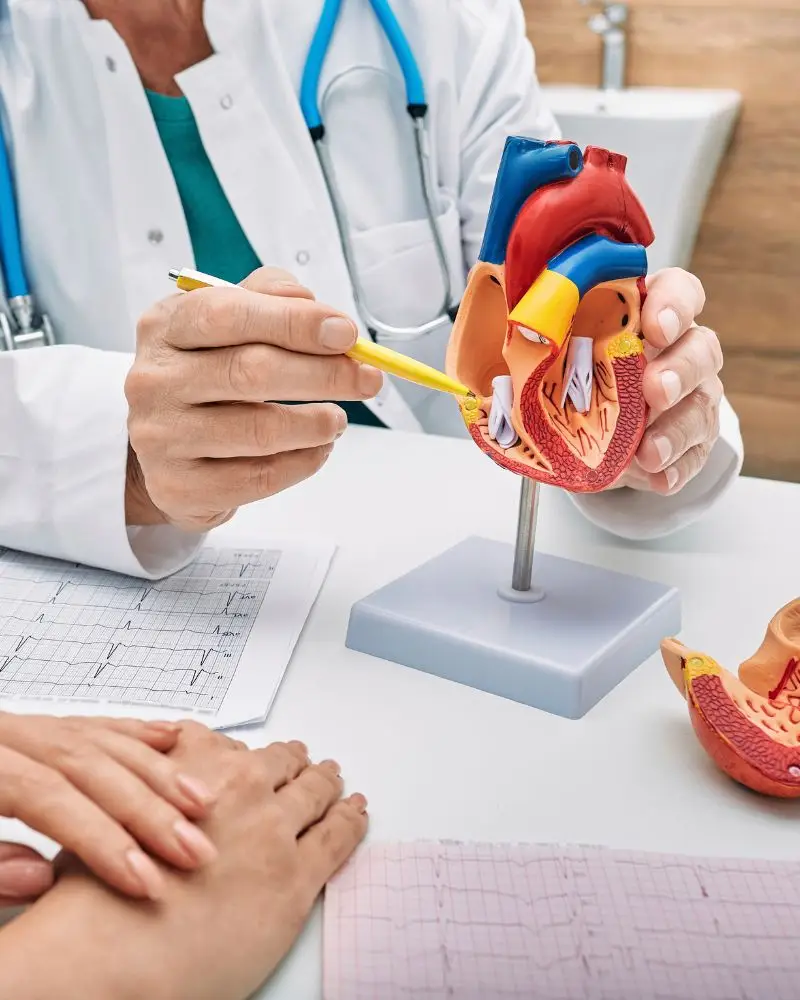



When coronary disease is suspected or already diagnosed, knowing who is guiding your care matters. Our cardiologists assess each patient individually rather than relying on a single test result, and explain what your arteries are doing and what each option actually achieves.

General & Preventive Cardiology

Preventive & Non-Invasive Cardiology

Interventional & Vascular Cardiology
Treatment plans tailored to your symptoms, history, and individual needs.
Preventive, diagnostic, interventional, and vascular care in one practice.
Modern diagnostics for heart rhythm, function, structure, and blood flow.
Serving Pearland with additional locations expanding across Greater Houston.
Experienced physicians with advanced cardiovascular training and expertise.
We work with many leading insurance plans for convenient access to care.
Alliance Heart & Vascular is expanding to serve patients across Pearland, Greater Houston and surrounding communities.
Comprehensive cardiology, preventive cardiovascular care, diagnostic evaluation, and follow-up.
View Pearland LocationAlliance Heart & Vascular is expanding across Greater Houston and nearby communities, bringing convenient access to trusted cardiovascular care closer to where our patients live and work.
Alliance Heart & Vascular works with many major health insurance plans. Insurance participation can vary by plan, network, employer, and location.
Please call (346) 614-0002 before your appointment to verify your specific insurance benefits and network participation. Our team can help answer questions about scheduling, referrals, and insurance verification.
Coronary disease is most treatable before it causes an event. Evaluation is worthwhile when symptoms suggest limited blood flow, or when your risk factors are significant enough that silent disease is plausible.
Symptoms that come on with a predictable amount of effort and settle with rest are the classic pattern of coronary disease. They should be assessed rather than worked around.
Coronary artery disease is closely linked to several other cardiovascular conditions. Learn more about:
If chest discomfort is severe, lasts more than a few minutes, occurs at rest, or comes with sweating, nausea, or breathlessness, call 911 immediately.
Do not wait for an office appointment.
Online appointment requests should never be used for potentially life-threatening symptoms.
The hallmark of coronary disease is a symptom brought on by exertion and relieved by rest. It is not always painful, and it is not always felt in the chest:
A symptom that appears at a predictable level of effort and resolves within minutes of stopping is highly suggestive of coronary disease and warrants formal testing.
Coronary disease is the end result of risk factors acting on the artery wall over many years. Most of them are modifiable, which is precisely why identifying and treating them changes outcomes.
Raised LDL is the fundamental driver of plaque formation. Lowering it slows progression and reduces the chance of a plaque rupturing. Read more about high cholesterol.
Sustained pressure damages the artery lining and accelerates plaque deposition throughout the coronary circulation. Read more about high blood pressure.
Diabetes substantially increases coronary risk and can blunt warning symptoms, so disease is sometimes more advanced by the time it is identified.
Smoking damages the artery lining directly and sharply increases the risk of clot formation. Stopping produces measurable benefit within months.
A parent or sibling with early heart disease raises your own risk independently of other factors, and risk rises steadily with age.
Excess weight and low fitness worsen cholesterol, blood pressure, and blood sugar simultaneously, compounding coronary risk from several directions at once.
Yes, and this is one of the most important things to understand about CAD. Plaque can narrow an artery considerably before anything is felt. Symptoms may be absent or misleading when:
Patients should not conclude that their arteries are healthy simply because they have no chest pain. For a substantial number of people, a heart attack is the first indication that coronary disease was ever present.
Coronary disease presents along a spectrum, from stable symptoms that appear predictably with effort through to a sudden blockage. Where you sit on that spectrum determines how urgently treatment is needed.
Predictable chest discomfort brought on by exertion and relieved by rest. It reflects a narrowing that limits blood flow when demand rises. Read more about chest pain.
Symptoms at rest, or that are new, severe, or escalating, suggest an unstable plaque. This requires emergency assessment rather than a clinic appointment.
Reduced blood flow without any symptoms, found on testing. It is more common in patients with diabetes and carries real risk despite the absence of warning.
Extensive or repeated damage to the heart muscle reduces pumping function and causes breathlessness and fluid retention. Read more about heart failure.
Scarred or poorly supplied heart muscle alters the electrical properties of the heart and can trigger rhythm disturbances. Read more about arrhythmias.
Not every patient needs every cardiac test. Testing should be selected based on your symptoms, examination, medical history, and cardiovascular risk. Depending on your individual situation, your cardiologist may recommend one or more of the following.
Measures the heart's electrical activity and may identify rhythm problems or other cardiac changes.
Uses ultrasound to evaluate heart function, chambers, valves, muscle, and structure.
Shows how the heart responds to physical activity and may help evaluate exercise-related symptoms.
Uses cardiac imaging during stress testing to assess blood flow to the heart muscle.
Records heart rhythm over time to help detect intermittent arrhythmias or palpitations.
Blood tests may evaluate cholesterol, blood sugar, kidney function, and other cardiovascular risk factors.
Certain patients may require additional cardiac imaging or coronary evaluation depending on their symptoms and risk profile. Your cardiologist will explain why a particular test is being recommended and how the results may influence your treatment plan.
Treatment has two aims running in parallel: relieving symptoms and preventing heart attack. Medication does most of the work for most patients, and procedures are added when symptoms persist or the anatomy demands it. Treatment may include:
Our objective is not simply to open a narrowed artery. It is to stop plaque progressing, protect the heart muscle you still have, and keep you able to exert yourself without symptoms.
Emergency and inpatient care focuses on the immediate event. What happens afterwards determines whether it happens again. Secondary prevention — the medications, targets, and risk factor control that follow — is where most of the long-term benefit is actually achieved.
You should arrange cardiology follow-up if you have:
Talk to our office — Monday to Friday, 8:00 a.m. to 4:30 p.m.
Call (346) 614-0002Coronary disease is most treatable before it announces itself.
Whether you have chest discomfort with exertion, an abnormal stress test or calcium score, several risk factors, or you are recovering from a heart attack or stent, our cardiologists can assess your coronary risk and build a long-term plan around it.
New patients are welcome.
Serving patients throughout Pearland, Greater Houston, and surrounding areas.