Early Warning Signs of Heart Failure You Shouldn’t Ignore
Heart failure announces itself quietly, in pillows, bathroom scales, and abandoned stairs. The early warning signs
Specialist evaluation and long-term management of heart failure — establishing the type, protecting heart function, and keeping fluid under control.
Heart failure does not mean the heart has stopped or is about to. It means the heart cannot pump or fill efficiently enough to meet the body's needs, so fluid backs up and physical exertion becomes difficult.
It is a manageable long-term condition rather than an endpoint. Modern treatment substantially improves symptoms, reduces hospital admissions, and lengthens life — but the right treatment depends on identifying which type of heart failure you have.
If you have breathlessness with activity or when lying flat, swelling in the legs, unexplained weight gain, or persistent fatigue, a cardiology evaluation can establish whether heart failure is the cause and how well your heart is actually pumping.
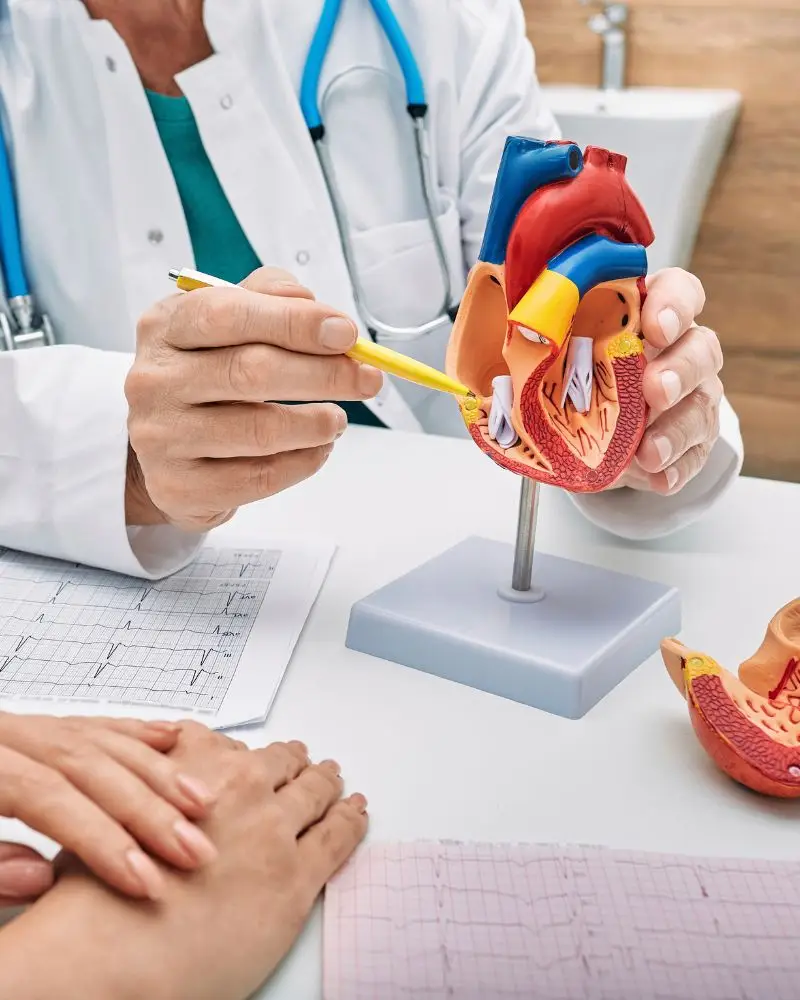



When you are living with heart failure, knowing who is guiding your treatment matters. Our cardiologists assess each patient individually rather than relying on a single test result, and take the time to explain your ejection fraction, your medications, and what to watch for at home.

General & Preventive Cardiology

Preventive & Non-Invasive Cardiology

Interventional & Vascular Cardiology
Treatment plans tailored to your symptoms, history, and individual needs.
Preventive, diagnostic, interventional, and vascular care in one practice.
Modern diagnostics for heart rhythm, function, structure, and blood flow.
Serving Pearland with additional locations expanding across Greater Houston.
Experienced physicians with advanced cardiovascular training and expertise.
We work with many leading insurance plans for convenient access to care.
Alliance Heart & Vascular is expanding to serve patients across Pearland, Greater Houston and surrounding communities.
Comprehensive cardiology, preventive cardiovascular care, diagnostic evaluation, and follow-up.
View Pearland LocationAlliance Heart & Vascular is expanding across Greater Houston and nearby communities, bringing convenient access to trusted cardiovascular care closer to where our patients live and work.
Alliance Heart & Vascular works with many major health insurance plans. Insurance participation can vary by plan, network, employer, and location.
Please call (346) 614-0002 before your appointment to verify your specific insurance benefits and network participation. Our team can help answer questions about scheduling, referrals, and insurance verification.
Heart failure needs specialist involvement from the outset, because both the diagnosis and the medication regimen are precise. Early, well-titrated treatment is what keeps patients out of hospital.
Weight gain of more than two to three pounds over a couple of days usually reflects fluid rather than fat, and is one of the earliest warnings that heart failure is decompensating.
Heart failure is closely linked to several other cardiovascular conditions. Learn more about:
If you develop severe breathlessness at rest, are gasping for air, cough up pink frothy sputum, or have chest pain or fainting, call 911 immediately.
Do not wait for an office appointment.
Online appointment requests should never be used for potentially life-threatening symptoms.
Heart failure symptoms come from two things: fluid accumulating where it should not, and the body not receiving enough blood during activity. Common experiences include:
Tracking your weight daily is one of the most useful things you can do. A steady rise usually reflects fluid retention and can be acted on well before symptoms become severe.
Heart failure is the end result of another condition damaging or overloading the heart. Establishing that underlying cause is essential, because several of them are treatable in their own right.
The most common cause. A previous heart attack leaves scar tissue that cannot contract, and ongoing narrowing limits the blood supply the muscle needs. Read more about coronary artery disease.
Years of pumping against raised pressure thicken and stiffen the heart muscle, eventually impairing how well it fills and relaxes. Read more about high blood pressure.
A narrowed or leaking valve forces the heart to work harder or handle extra volume, and over time the muscle weakens under that load.
Disease of the heart muscle itself, which may be inherited, follow a viral illness, or result from alcohol, chemotherapy, or pregnancy.
A persistently fast or irregular rhythm reduces pumping efficiency and can itself weaken the heart over time. Read more about atrial fibrillation.
Diabetes damages both the small vessels and the heart muscle directly, and is a strong independent contributor to heart failure risk.
Heart failure is classified by how well the heart squeezes, measured as the ejection fraction on an echocardiogram. The distinction matters because treatment differs substantially between them:
Patients should not assume heart failure has been excluded because they were told the heart pumps normally. Around half of all heart failure occurs with a preserved ejection fraction, where the problem is stiffness and filling rather than squeezing.
Heart failure can develop gradually over months or appear suddenly over days. The pattern of onset, and which side of the heart is most affected, shape both the symptoms and the urgency.
Breathlessness and fatigue that creep up over months are easily attributed to age or being unfit. Many patients quietly reduce their activity rather than report a symptom.
A rapid increase in breathlessness and swelling over days, often triggered by infection, an arrhythmia, dietary salt, or missed medication. This needs prompt assessment.
When the right side of the heart struggles, swelling in the legs and abdomen dominates rather than breathlessness, and the liver may become congested.
Common in older patients with hypertension, diabetes, or atrial fibrillation. Symptoms are identical to other heart failure, but the echocardiogram shows normal squeezing.
Damage to a segment of heart muscle can reduce pumping function immediately or over the following months, which is why follow-up imaging matters.
Not every patient needs every cardiac test. Testing should be selected based on your symptoms, examination, medical history, and cardiovascular risk. Depending on your individual situation, your cardiologist may recommend one or more of the following.
Measures the heart's electrical activity and may identify rhythm problems or other cardiac changes.
Uses ultrasound to evaluate heart function, chambers, valves, muscle, and structure.
Shows how the heart responds to physical activity and may help evaluate exercise-related symptoms.
Uses cardiac imaging during stress testing to assess blood flow to the heart muscle.
Records heart rhythm over time to help detect intermittent arrhythmias or palpitations.
Blood tests may evaluate cholesterol, blood sugar, kidney function, and other cardiovascular risk factors.
Certain patients may require additional cardiac imaging or coronary evaluation depending on their symptoms and risk profile. Your cardiologist will explain why a particular test is being recommended and how the results may influence your treatment plan.
Heart failure treatment has changed substantially, and the medications used in reduced ejection fraction now improve survival rather than only symptoms. Treatment is built up in steps and adjusted over time. It may include:
Our objective is to keep you out of hospital and active. That means treating the underlying cause, building medication up to the doses that genuinely protect the heart, and catching fluid buildup early.

The weeks following a heart failure admission are the highest-risk period for readmission. Medication doses are usually still well below target at discharge, and building them up safely is one of the most valuable things outpatient cardiology does.
You should arrange prompt follow-up if you have:
Talk to our office — Monday to Friday, 8:00 a.m. to 4:30 p.m.
Call (346) 614-0002Breathlessness and swelling deserve an explanation.
Whether you have been newly diagnosed, discharged after an admission for fluid overload, told your ejection fraction is reduced, or you are struggling with breathlessness and swelling that keep coming back, our cardiologists can establish the type, treat the cause, and build a plan that keeps you out of hospital.
New patients are welcome.
Serving patients throughout Pearland, Greater Houston, and surrounding areas.