
Early Warning Signs of Heart Failure You Shouldn’t Ignore
Heart failure announces itself quietly, in pillows, bathroom scales, and abandoned stairs. The early warning signs
Specialist evaluation and treatment for narrowed leg arteries — from leg pain when walking through to minimally invasive treatment, with vascular testing on site.
Peripheral artery disease, or PAD, develops when plaque narrows the arteries outside the heart — most often those supplying the legs. Less blood reaches the muscles, especially during walking, and the legs are the first place it shows.
PAD is a circulation problem, not a muscle or joint problem — and because it shares its causes with coronary artery disease, finding PAD is also a warning about the heart. Patients with PAD carry a markedly higher risk of heart attack and stroke.
If you have leg pain or cramping when walking that eases with rest, sores that heal slowly, or a foot that is cold or discolored, a vascular evaluation can determine whether narrowed arteries are the cause and what should be done about it.
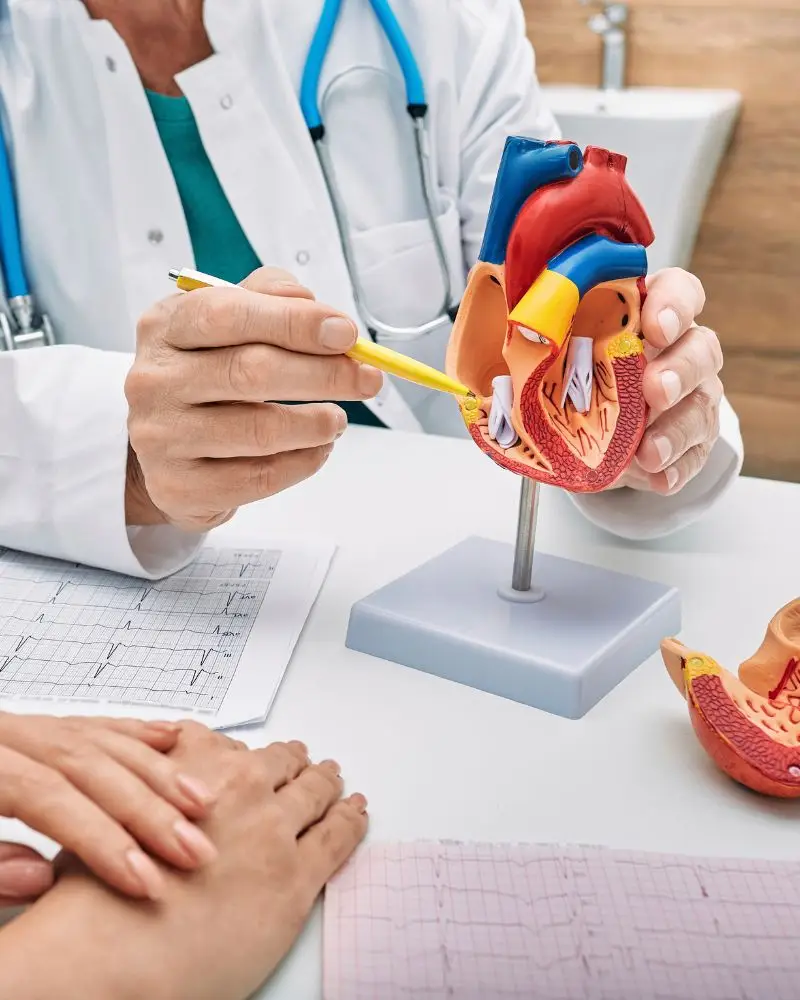



When your leg circulation is in question, it matters that the same team can see the whole picture. Our cardiologists assess the legs, the heart, and the shared risk factors driving both — including on-site vascular ultrasound and catheter-based treatment.

General & Preventive Cardiology

Preventive & Non-Invasive Cardiology

Interventional & Vascular Cardiology
Treatment plans tailored to your symptoms, history, and individual needs.
Preventive, diagnostic, interventional, and vascular care in one practice.
Modern diagnostics for heart rhythm, function, structure, and blood flow.
Serving Pearland with additional locations expanding across Greater Houston.
Experienced physicians with advanced cardiovascular training and expertise.
We work with many leading insurance plans for convenient access to care.
Alliance Heart & Vascular is expanding to serve patients across Pearland, Greater Houston and surrounding communities.
Comprehensive cardiology, preventive cardiovascular care, diagnostic evaluation, and follow-up.
View Pearland LocationAlliance Heart & Vascular is expanding across Greater Houston and nearby communities, bringing convenient access to trusted cardiovascular care closer to where our patients live and work.
Alliance Heart & Vascular works with many major health insurance plans. Insurance participation can vary by plan, network, employer, and location.
Please call (346) 614-0002 before your appointment to verify your specific insurance benefits and network participation. Our team can help answer questions about scheduling, referrals, and insurance verification.
Leg symptoms are routinely blamed on age or arthritis, and PAD goes undiagnosed for years as a result. Evaluation is appropriate for:
Pain that arrives after a predictable walking distance and settles with rest is claudication — the classic PAD pattern — and it should be assessed rather than accommodated.
Peripheral artery disease is closely linked to several cardiovascular conditions. Learn more about:
If a leg or foot becomes suddenly cold, pale, numb, or severely painful, this may be an acute arterial blockage — call 911 immediately. Do not wait for an office appointment.
Do not wait for an office appointment.
Online appointment requests should never be used for potentially life-threatening symptoms.
Symptoms are often mild at first, and some people — particularly with diabetes — feel nothing at all. The common patterns:
Some people with PAD have no symptoms at all. If you have diabetes, smoke, or are over 65, ask about screening even if your legs feel fine.
PAD develops as plaque builds up in the artery wall over years — the same atherosclerosis that narrows coronary arteries, driven by the same risk factors.
The single strongest PAD risk factor. Smoking damages the artery lining directly, accelerates plaque, and worsens outcomes after every treatment. Stopping produces measurable benefit within months.
Raises PAD risk substantially and can mute the warning symptoms, so disease is often more advanced when found. Regular foot checks matter.
Elevated LDL is the raw material of the plaque narrowing the leg arteries — and lowering it slows the disease everywhere at once.
Sustained pressure injures the artery lining throughout the body and accelerates narrowing in the legs as in the heart.
Risk rises steadily after 65, and a family history of vascular disease raises it independently of everything else.
Chronic kidney disease accelerates vascular calcification and is a strong independent contributor to PAD.
Yes — several conditions produce leg pain that resembles claudication, and separating them is a core part of the evaluation:
Patients should not assume leg pain on walking is simply aging or arthritis without evaluation. PAD is common, treatable, and an important warning about the heart as well as the legs.
PAD runs a spectrum from silent narrowing to a threatened limb, and the stage determines the urgency.
Narrowing found on screening before symptoms — an abnormal ankle-brachial index. The main action is protecting the heart and slowing progression.
Cramping at a predictable walking distance, easing with rest. Very treatable — supervised walking and medication often restore substantial distance.
Heaviness, fatigue, or aching without the classic pattern — common in diabetes and often mislabeled for years.
Foot pain at night eased by hanging the leg down means blood flow is critically limited — this stage needs prompt vascular assessment.
Non-healing sores or tissue loss with severely reduced flow. This is limb-threatening and treated urgently to restore circulation.
Not every patient needs every cardiac test. Testing should be selected based on your symptoms, examination, medical history, and cardiovascular risk. Depending on your individual situation, your cardiologist may recommend one or more of the following.
Measures the heart's electrical activity and may identify rhythm problems or other cardiac changes.
Uses ultrasound to evaluate heart function, chambers, valves, muscle, and structure.
Shows how the heart responds to physical activity and may help evaluate exercise-related symptoms.
Uses cardiac imaging during stress testing to assess blood flow to the heart muscle.
Records heart rhythm over time to help detect intermittent arrhythmias or palpitations.
Blood tests may evaluate cholesterol, blood sugar, kidney function, and other cardiovascular risk factors.
Certain patients may require additional cardiac imaging or coronary evaluation depending on their symptoms and risk profile. Your cardiologist will explain why a particular test is being recommended and how the results may influence your treatment plan.
Treatment has two goals running together: relieving your leg symptoms and protecting you from heart attack and stroke. Most PAD is treated medically; procedures are added when symptoms limit your life or the limb is threatened. Treatment may include:
Our objective is to keep you walking comfortably, protect the limb, and treat the arterial disease that threatens your heart and brain at the same time.
PAD is often discovered indirectly — an abnormal ankle-brachial index, weak pulses at a diabetic foot check, or a finding on a scan ordered for something else. A finding without a plan helps nobody; a vascular consultation turns it into one.
An appointment is appropriate if you have:
Talk to our office — Monday to Friday, 8:00 a.m. to 4:30 p.m.
Call (346) 614-0002Leg pain when walking is not just part of getting older.
Whether you have cramping when you walk, a wound that will not heal, an abnormal vascular test, or diabetes with foot concerns, our team can assess your circulation — and the cardiovascular risk that comes with it — with testing on site.
New patients are welcome.
Serving patients throughout Pearland, Greater Houston, and surrounding areas.